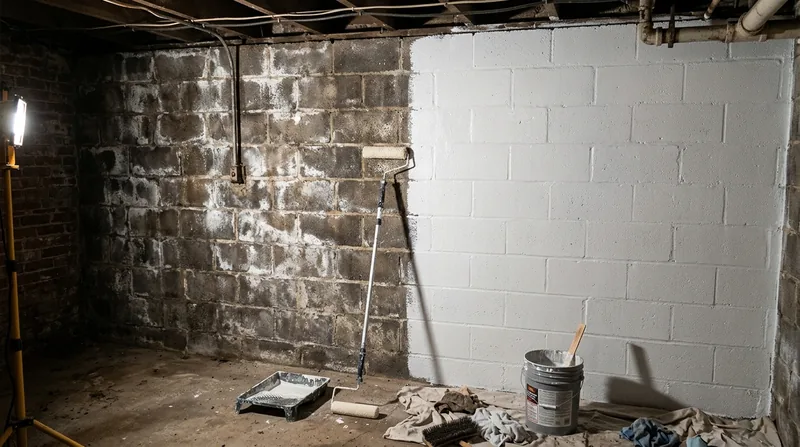




Basement Wall Sealing in Reading: Stop the Damp Before It Spreads
If you own a stone, brick, or block basement in Reading, you already know the pattern. The first warm, wet week of March hits, and the wall on the uphill side starts to sweat. A white chalky bloom creeps across the mortar joints in the West End rowhouses, and the smell in the stairwell tells you the basement is taking on moisture. Basement Wall Sealing in Reading is the first line of defense for that kind of dampness, but only when the problem is surface moisture and not groundwater pushing through the wall.
Reading sits in a valley where clay-rich residual soil over shale and limestone holds water against the foundation. The Schuylkill and the creeks swell after heavy rain, and the water table rises in the low blocks near Centre Park and Pennside. Older cellars were built with stone and brick that wick moisture, and 1950s block basements in Wyomissing and Shillington crack along the mortar. We seal walls that are damp but structurally sound, and we tell you plainly when a sealer is the wrong tool. Call (610) 816-6520 to schedule a free inspection, or read more about our basement waterproofing approach if you are not sure which problem you have.
Why Basement Wall Sealing Matters in Reading's Older Housing Stock
Most of the basements we see in Reading were not built with a modern waterproof membrane. Stone rubble walls in the older rowhouses, brick cellars in Centre Park, and early block walls in Pennside all rely on parging and mortar to shed water. Freeze-thaw cycles crack that mortar, and the clay soil holds water against the wall long after the rain stops. Sealing the interior face slows vapor movement and stops surface dusting, but it cannot hold back hydrostatic pressure.
- Efflorescence removal clears the salt bloom that tells you water is moving through the wall.
- Surface preparation removes loose parging, mortar dust, and old paint so the sealer bonds to sound masonry.
- Penetrating sealers soak into brick, block, and stone and block capillary suction without trapping vapor.
- Membrane sealers form a flexible film on block walls that resist minor movement and dampness.
- Moisture testing tells us whether the wall is damp from surface condensation or from water pushing through.
We test before we seal, because a sealer applied over an active leak traps water and makes the problem worse. The City of Reading codes office handles permits for structural work, and you can verify contractor registration through the Pennsylvania Department of Labor and Industry.
Key info: A 1920s brick twin in Centre Park with chalky white efflorescence and a damp wall is a good candidate for sealing. The same wall with water running at the cove joint after a storm is not. That is hydrostatic pressure, and it needs drainage, not a sealer.
How We Seal Basement Walls in Reading, Step by Step
Our process starts with a free inspection, because the wall tells us what it needs. We look at the mortar joints, the cove where the wall meets the floor, the window wells, and the grading outside. In a Shillington split-level with a block wall, the fix is often sealing plus a downspout extension. In a Wyomissing ranch with a wet cove joint, the fix is an interior perimeter drain. We do not sell a sealer to a homeowner who needs drainage.
- We inspect the wall, test moisture, and identify whether the source is vapor, capillary suction, or hydrostatic pressure.
- We remove efflorescence, loose parging, and failed coatings with wire brushes and a masonry cleaner.
- We repair cracks and mortar joints with a hydraulic cement or epoxy patch before any sealer goes on.
- We apply the penetrating or membrane sealer in two coats, keeping the wall damp between coats for proper cure.
- We check the exterior grade and downspouts and recommend extensions so roof water moves away from the foundation.
If the inspection shows water at the cove joint or a rising water table, we recommend an interior drain tile system instead of a sealer, and we explain why before you spend a dollar.
Key info: On a 1950s block ranch in Sinking Spring, we found damp walls with no water at the floor. Sealing and a downspout extension solved it. On a stone farmhouse outside Boyertown, the mortar was washed out and water ran at the floor. That needed repointing and drainage, not a sealer.
Sealing Methods We Use on Reading Basement Walls
Not every wall takes the same product. Brick, stone, and block behave differently, and a sealer that works on a poured wall can trap moisture in a stone cellar. This table shows the approaches we use and where each one fits.
| Approach | Description | Best for |
|---|---|---|
| Penetrating sealer | Soaks into brick, block, or stone and blocks capillary suction without a film. | Damp walls with efflorescence and no standing water. |
| Membrane sealer | Flexible coating that bridges hairline cracks and resists minor movement. | Block walls with surface dampness and fine cracking. |
| Crack and mortar repair | Hydraulic cement or epoxy patch before sealing. | Washed-out mortar joints and shrinkage cracks. |
| Drainage correction | Downspout extensions, grading, and window well drainage. | Wet walls after rain with water at the cove joint. |
If the wall is bowing or the crack is wider than a hairline, sealing is not the answer. That is a structural issue, and we refer it to a bowing wall repair specialist rather than seal over it.
Basement Wall Sealing Cost in Reading: What to Expect
Basement wall sealing in Reading starts around $1,500 for a typical basement wall area with surface preparation, efflorescence removal, and two coats of sealer. The price moves with wall size, access, and how much prep the masonry needs. A small cellar in a West Reading rowhouse costs less than a full basement in a Wyomissing ranch with heavy efflorescence and old paint to strip. Crack repair and mortar patching add to the job, and so does a wall that needs a membrane product instead of a penetrating sealer.
We give you a written estimate after the inspection, with the prep, product, and labor broken out. We do not quote a sealer when the inspection shows hydrostatic pressure, because that is a different job. Getting two or three estimates is smart, and so is asking each contractor whether they tested the wall or just looked at it. Our pricing page has the full range for related work.
Basement Wall Sealing Near Me: How to Choose a Contractor Near Reading
When you search for basement wall sealing near me, you get a long list of names. The right contractor tests the wall before quoting, carries liability and workers compensation insurance, and will tell you when sealing is not the fix. Ask for references from jobs in Reading or the surrounding boroughs, and call them.
Permits are commonly required for structural foundation repair and for work that alters drainage or the sanitary connection of a sump discharge, and the rules vary by municipality. Always check with the local building department before work starts. A contractor who hesitates on that question is not the one you want. Reach out through our contact page to schedule your free inspection.
Basement Wall Sealing in Reading: Pricing Guide
| Service | Price | Details |
|---|---|---|
| Single wall sealing | Starting at $1,500 | Includes surface prep, efflorescence removal, and two coats of penetrating sealer on one wall. |
| Full basement sealing | Starting at $2,800 | Covers all walls with prep and sealer; price rises with wall area and heavy paint removal. |
| Membrane sealer application | Starting at $2,200 | Flexible coating for block walls with hairline cracks; prep and two coats included. |
| Crack and mortar repair | Starting at $450 | Hydraulic cement or epoxy patch on washed joints and shrinkage cracks before sealing. |
| Complex or large-scale job | On estimate | Stone walls, heavy efflorescence, and multi-room basements need an on-site look first. |
| Estimate | Free | Response within 24h at (610) 816-6520, no obligation to book. |
Indicative pricing, the exact cost depends on square footage, finish, and site access. Free personalized estimate within 24h at (610) 816-6520.


