



Battery Backup Sump Pumps in Reading: Keep the Pit Dry When the Grid Drops
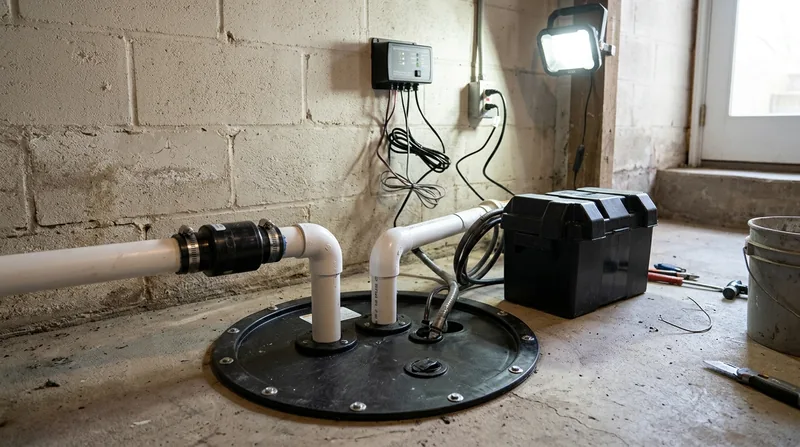
When a spring storm rolls up the Schuylkill valley and knocks out power in the West End, your primary sump pump stops with it, and the water table under those 1920s brick rowhouses does not wait for the utility crew. Battery Backup Sump Pumps in Reading are the second line of defense: a DC pump on a charged battery that kicks in the moment the AC pump loses power or the float jams. We size the unit to your existing sump basin, wire it to a dedicated charger, and test the whole setup before we leave. If you have ever come downstairs after a storm to find two inches of water across the cellar floor, this is the upgrade that ends that cycle. Start with a free basement inspection so we can confirm your pit depth, discharge route, and float height before we quote anything.
Why Reading Basements Need a Backup, Not Just a Primary Pump
Reading sits where clay-rich residual soil meets the shale and limestone of the valley floor, and the low ground along the Schuylkill and the creeks holds a high water table for most of the year. When a heavy rain event swells those creeks, hydrostatic pressure pushes groundwater against stone, brick, and early block walls, and the sump pump runs almost continuously. That is exactly the load that burns out a primary pump or trips a breaker, and it usually happens during the same outage that takes out your lights.
- Old rowhouse cellars in Centre Park and Pennside often have shallow pits that fill fast, so a backup pump buys you real minutes.
- 1950s and 1960s block basements in Wyomissing and Shillington see steady seepage during spring melt, and the pump cycles all night.
- Freeze-thaw cycles crack old mortar joints and open paths for water that only show up when the ground is saturated.
- Power outages from ice storms and summer squalls are the single most common reason a working pump still leaves you with a wet basement.
A backup pump does not replace the primary; it covers the gap between the moment power fails and the moment you get the basement dry again.
Key info: In February 2021, a West Reading homeowner lost power for nine hours during an ice storm. Her primary pump was fine, but the pit filled within forty minutes and water reached the furnace. A battery backup with a 12-hour runtime would have held the pit dry through the entire outage.
For official guidance on sump discharge and stormwater rules in the city, check the City of Reading codes and public works pages before you alter any discharge line.
How We Install a Battery Backup Sump Pump in a Reading Basement
Every install starts with the pit, not the box. We measure basin diameter and depth, check the existing check valve and discharge line, and confirm the float switch on your primary pump is not already hanging by a wire. From there we match the backup pump's flow rate to the volume your pit actually takes in during a storm, because an undersized backup is worse than none: it gives you false confidence.
- We inspect the sump basin, primary pump, check valve, and discharge line for clogs or backflow problems.
- We set the backup pump on its own bracket so both floats operate independently and neither interferes with the other.
- We mount the battery and charger on a shelf or wall bracket clear of rising water and test the charger under load.
- We wire the alarm to sound on battery low, pump run, and AC failure so you hear a problem before the pit overflows.
- We run a live test with water to confirm the backup cycles, the check valve seals, and the discharge clears the foundation.
If your discharge line currently dumps two feet from the wall, we extend it and re-grade the soil so the water leaves the foundation instead of cycling back into the pit.
Key info: A Sinking Spring split-level had a backup pump installed by a previous owner with the battery sitting on the basement floor. The first spring melt put three inches of water in the pit room and killed the battery. We remounted the unit on a wall shelf and added a low-water alarm. That is the kind of detail a proper install covers.
If your primary pump is already past its service life, pair the backup with a full sump pump installation or replacement so both units are sized to the same pit and discharge.
Backup Pump Options We Install in Berks County
There is no single right backup for every Reading basement. A shallow 1900s cellar pit in Kenhorst takes a different setup than a deep poured basin in a newer Muhlenberg Township subdivision. The table below shows the approaches we use and where each one fits.
| Approach | Description | Best for |
|---|---|---|
| DC battery backup pump | A 12V pump on a dedicated battery and charger, plumbed into the same pit as the primary. | Most Reading rowhouses and twins with an existing sump basin. |
| Combination primary and backup unit | One housing with an AC primary and a DC backup, sharing a single discharge line. | Basements where the pit is tight and both pumps need to fit. |
| Battery plus high-water alarm | Backup pump with an audible alarm on AC loss and high water level. | Finished basements and any home where nobody is downstairs daily. |
| Extended runtime battery bank | Larger or dual batteries for outages that stretch past 12 hours. | Low-lying homes near the Schuylkill and the creeks. |
| Backup with discharge upgrade | Backup pump plus a new check valve, discharge line, and freeze-resistant termination. | Older installs where the existing line is undersized or buried. |
We will tell you plainly if a backup alone is not enough and the real fix is an interior drain tile system to relieve hydrostatic pressure before it reaches the pit.
Battery Backup Sump Pumps Cost in Reading: What to Expect
Most homeowners in Reading pay from $900 for a standard DC backup pump with battery, charger, and alarm, installed and tested. That figure covers a straightforward swap into an existing pit with a sound primary pump and a working discharge line. From there, the number moves with the equipment and the condition of what you already have.
- Battery capacity is the biggest driver, and a unit sized for a 12-hour outage costs more than a four-hour model.
- Pit condition matters, because a cracked or undersized basin may need relining before the backup goes in.
- Discharge line work adds cost when the existing line is buried, undersized, or terminating too close to the foundation.
- Combination primary and backup units cost more than a backup alone but replace a failing primary at the same time.
- Alarm and monitoring options add a modest amount and are worth it in finished basements.
Get two or three written estimates and compare what is actually included, not just the bottom line. A quote that omits the battery, the check valve, or the live test is not the same job. Our full pricing overview breaks down the ranges in more detail.
Battery Backup Sump Pumps Near Me: How to Vet a Contractor Near Reading
Searching for battery backup sump pumps near me in Reading returns plenty of names, and the differences between them matter more than the ads suggest. A backup pump is a small job with a big consequence if it is wired wrong or sized wrong, so treat the hiring process the same way you would for a furnace or an electrical panel.
- Confirm the contractor is licensed and insured, and ask for a certificate of insurance before work starts.
- Get two or three written estimates that list the pump model, battery size, and what testing is included.
- Ask for local references from Reading or a nearby borough and call them, especially about storm-season performance.
- Ask whether the work touches the sanitary connection or discharge route, since those can require a permit from the local building department.
- Check HOA rules in newer township subdivisions before mounting a battery box or running a new discharge termination.
Permit thresholds vary by jurisdiction, so verify with the City of Reading or your township building department rather than assuming. When you are ready to talk through your pit and your outage history, contact us for a free estimate at (610) 816-6520.
Battery Backup Sump Pumps in Reading: Pricing Guide
| Service | Price | Details |
|---|---|---|
| Standard DC backup pump install | Starting at $900 | Includes pump, battery, charger, alarm, and live test in an existing sound pit. |
| Combination primary and backup unit | Starting at $1,450 | Replaces a failing primary and adds backup in one housing on a shared discharge. |
| Extended runtime battery bank | Starting at $1,350 | Dual or oversized batteries for outages longer than 12 hours in low-lying areas. |
| Backup with discharge upgrade | On estimate | Needs an on-site look at line routing, check valve condition, and termination point. |
| Travel | Included | In Reading and surrounding areas, no separate call-out or mileage fee. |
| Estimate | Free | Response within 24h at (610) 816-6520, no obligation to book. |
Indicative pricing, the exact cost depends on square footage, finish, and site access. Free personalized estimate within 24h at (610) 816-6520.


