



Foundation Crack Repair in Reading
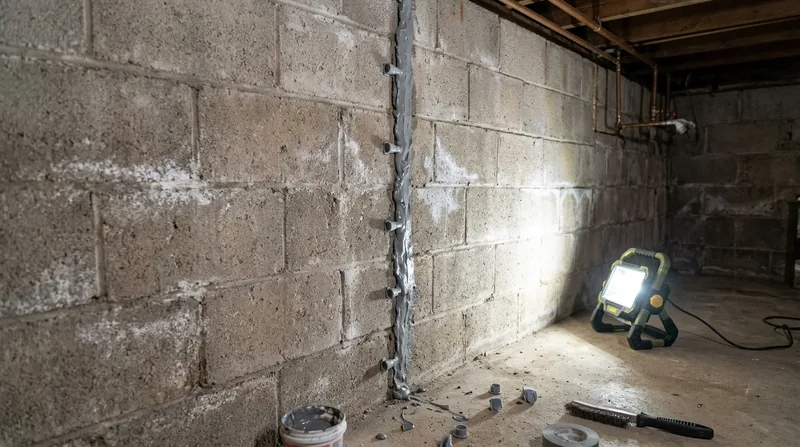
Reading's housing stock tells the story before anyone picks up a hammer. The 1900s-1930s brick rowhouses and twins in the West End, Centre Park and Pennside sit on stone, brick or early block foundations, and the 1950s-1970s ranches in Wyomissing, Shillington and Sinking Spring were poured and blocked into clay-rich residual soil over shale and limestone. That ground swells after heavy rain, the creeks and the Schuylkill push the water table up, and the freeze-thaw cycle works on old mortar joints every winter. When a crack opens, water follows it. Foundation Crack Repair in Reading is the trade of matching each crack to the right method, epoxy or polyurethane injection for tight non-structural cracks, structural repair when frost and wet clay have moved the wall. We inspect first, then we tell you plainly whether simple sealing is enough or whether hydrostatic pressure is the real problem. Start with a free basement inspection so the diagnosis is based on the wall, not a guess.
Why Foundation Cracks Matter in Reading's Clay and Stone Basements
In Reading, most foundation cracks are not random. They follow the way the house was built and the way the ground moves. A stone or brick cellar wall in Centre Park cracks along the mortar because the lime mortar is softer than the stone and the freeze-thaw cycle opens it a little more each winter. A block basement in Shillington cracks at the block joints when the clay soil stays saturated and pushes inward. A poured wall in a newer township subdivision cracks at the shrinkage line or at a cold joint, and that is where the seepage shows up after a storm. Efflorescence on the wall is the white chalky sign that water has been moving through the masonry and evaporating on the inside face. When you see it, the crack is already working.
- Hydrostatic pressure from saturated glacial clay soil pushes water through hairline cracks that look harmless from the inside.
- Freeze-thaw cycles crack old mortar joints in brick and stone cellars across the West End and Pennside.
- Differential settlement moves one side of a foundation faster than the other and turns a hairline into a step crack.
- Clogged or failed footing drains raise the water table against the wall and make every existing crack leak harder.
- Poor grading and short downspouts dump roof water right at the foundation line, which is the cheapest problem to fix and the most common.
None of these are solved by smearing hydraulic cement over the inside face. The crack has to be filled from the inside out or the wall has to be stabilized, and the difference between those two jobs is what the inspection is for.
Key info: A rowhouse in the 19602 ZIP with a damp patch at the cove joint after every heavy rain usually has a footing drain problem, not a crack problem. A twin in Wyomissing with a clean vertical crack and white efflorescence usually has a crack that epoxy injection will close in a day. We see both in the same week, and they get different answers.
For the official word on what work needs a permit in the City of Reading, check the City of Reading building department before any structural repair is scheduled.
How We Diagnose and Repair Foundation Cracks in Reading
We do not quote a crack repair over the phone and we do not inject a wall we have not looked at. The method depends on crack width, whether the wall is moving, whether the crack is active or dormant, and what the soil is doing on the outside. A tight vertical crack in a poured wall in Sinking Spring gets a different repair than a stair-step crack in a block wall in Kenhorst, and a bowing block wall in Mohnton is a structural job, not an injection job. Here is the sequence we follow on a Reading-area basement.
- We walk the basement and map every crack, marking width, direction and whether it is wet, stained or effloresced.
- We check the wall for plumb and bow with a level and straightedge, because movement changes the repair method.
- We look at grading, downspout discharge and window wells on the outside to see where the water is entering the soil.
- We confirm whether a sump pump and interior perimeter drain are present and working, since a wet wall often needs drainage more than injection.
- We schedule structural repair with carbon fiber straps or wall anchors when the crack is wide, offset or paired with a bowing wall.
- We clean up, verify the injection ports are sealed, and leave you with a written record of what was repaired and why.
That sequence is why the estimate holds up. The repair is chosen from what the wall is doing, not from a catalog.
Key info: A 1950s block ranch in Shillington had a horizontal crack at the fourth course and a slight inward bow at mid-wall. Injection alone would have failed within a season. We strapped the wall, then injected the crack, and the homeowner got a repair that matched the movement instead of hiding it. That is the kind of call the on-site inspection is for.
If the inspection shows the water is coming through the wall broadly rather than through one crack, the better answer is often an interior drain tile system that relieves the pressure at the footing instead of chasing cracks one at a time.
Crack Repair Methods We Use and When Each One Fits
There is no single repair that handles every crack in Berks County. The table below is the short version of how we match method to crack. The long version happens on site, with a level, a moisture meter and a look at the outside grade.
| Approach | Description | Best for |
|---|---|---|
| Epoxy injection | Ports are set along the crack and structural epoxy is pumped in to bond the concrete back together. | Non-structural vertical cracks in poured walls that are stable and dry. |
| Polyurethane injection | Flexible foam resin expands into the crack and seals active seepage, even while water is present. | Active leaks, hairline cracks and cracks that move with the freeze-thaw cycle. |
| Carbon fiber straps | Straps are anchored to the wall to resist inward movement and hold a cracked or bowing wall in place. | Block walls with a horizontal crack or a slight bow. |
| Wall anchors | Anchors are driven into the soil outside and connected through the wall to pull it back toward plumb. | Walls that have moved inward and need to be straightened, not just held. |
| Parging and wall sealing | A repaired crack is coated and sealed to close the surface and shed the remaining moisture. | Stone and brick cellars where the mortar itself is the leak path. |
Every row in that table is a different price and a different lifespan, which is why we do not sell one repair for every crack.
Foundation Crack Repair Cost in Reading: What to Expect
Foundation crack repair in Reading starts at $450 for a single non-structural crack with epoxy or polyurethane injection, and that figure is honest for a straightforward vertical crack in a poured or block wall. The number moves from there based on how many cracks are active, how wide they are, whether the wall has moved, and how much prep the basement needs before injection can start. A stone cellar in Centre Park with soft mortar and several leak points is a different job than one clean crack in a Shillington block wall. We give you a written scope with the method named, so you can compare two estimates on the same terms.
Get two or three estimates and ask each contractor what method they are proposing and why. If one quote is injection and another is a full perimeter drain, the difference is the diagnosis, not the price. Our full pricing overview lays out the ranges so you know what you are comparing.
Foundation Crack Repair Near Me: Hiring a Contractor Near Reading
When you search for foundation crack repair near me, the list you get is not the same as a list of contractors who are set up for below-grade work in Berks County. Ask for the license and insurance certificate before anyone starts, and confirm the policy covers foundation and waterproofing work, not just general handyman work. Ask for local references from jobs in Reading or the surrounding boroughs, and call one. Ask whether the repair is injection or structural, because those require different skills and different permits.
Permits for structural foundation repair vary by jurisdiction in Berks County, so confirm with the local building department before the work is scheduled. Get the scope in writing with the method named, the number of injection ports, and what happens if a second crack shows up during the job. A contractor who will not put that in writing is telling you something. Reach out through our contact page and we will set up the inspection.
Key info: A homeowner in West Reading got three quotes for one crack. Two were injection, one was a full exterior excavation. The excavation quote was not wrong for a different wall, but it was wrong for that crack. The inspection is what separates the two, and it costs you nothing to get it.
Call (610) 816-6520 to schedule.
Foundation Crack Repair in Reading: Pricing Guide
| Service | Price | Details |
|---|---|---|
| Single crack epoxy injection | Starting at $450 | One non-structural vertical crack in a poured or block wall, ports set and epoxy pumped to bond the concrete. |
| Active leak polyurethane injection | Starting at $550 | Flexible foam resin for a crack that is leaking or moving, sealed even while water is present at the wall. |
| Multiple crack repair | Starting at $850 | Two to four cracks mapped and injected in one visit, priced per crack with prep and cleanup included. |
| Structural repair with carbon fiber straps | On estimate | Cracked or bowing block wall that needs straps or anchors, scoped after the on-site inspection confirms movement. |
| Travel | Included | In Reading and surrounding areas, no separate call-out or mileage fee. |
| Estimate | Free | Response within 24h at (610) 816-6520, no obligation to book. |
Indicative pricing, the exact cost depends on square footage, finish, and site access. Free personalized estimate within 24h at (610) 816-6520.


