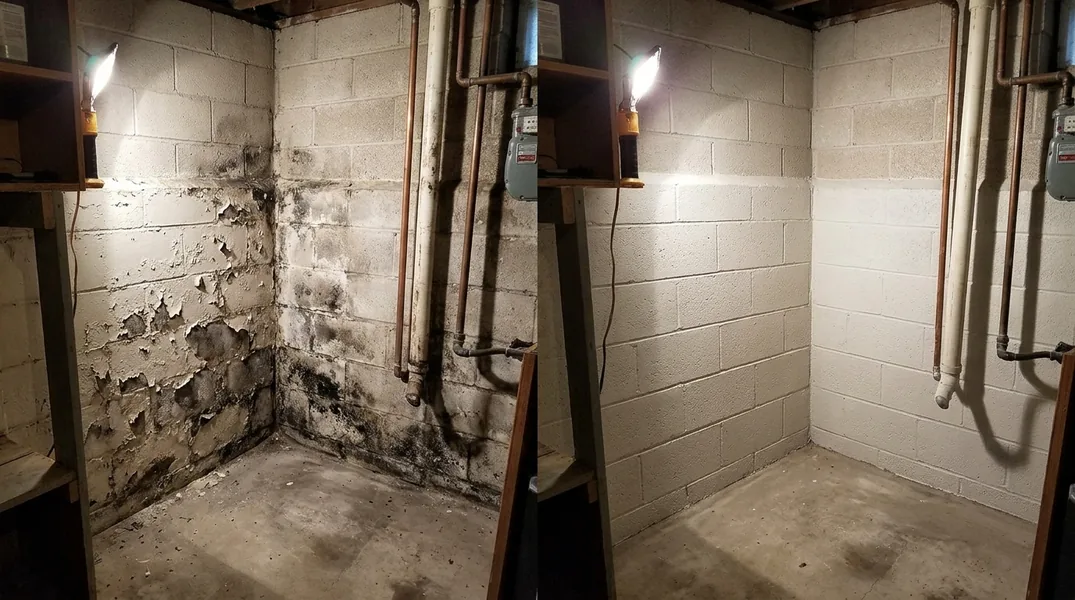
Why Berks County Basements Face Unique Waterproofing Challenges
If you own a home in Berks County, you have probably noticed that water in the basement is not just a plumbing problem. The region sits on a mix of shale, limestone, and the notorious valley clay that expands when wet and traps water against foundation walls. That clay is one of the main reasons so many homeowners in Reading deal with damp walls, efflorescence, and puddles after heavy spring rains. Unlike sandy soils that drain quickly, valley clay holds moisture for days, slowly pushing hydrostatic pressure against your foundation.
This matters when you start researching interior vs exterior waterproofing. Most general advice online assumes loose, well-draining soil, which is not what you have here. A strategy that works in a dry climate may underperform in a Berks County basement where the water table rises seasonally and clay keeps the soil saturated. Understanding your specific soil conditions is the first step before choosing between a Interior Drain Tile System and Exterior Basement Waterproofing.
How Interior Drain Tile Systems Work (and When They Win)
An interior system is installed along the inside perimeter of your basement footing. The crew breaks up a narrow strip of concrete, digs a trench, and lays perforated pipe in washed stone, directing water to a sump pit where a pump discharges it away from the house. The advantage is that it captures water right where it enters, it is not affected by exterior clay, and it can be installed year-round without excavating your yard. For many homes in West Reading and older boroughs where driveways, decks, and mature landscaping sit tight against the foundation, interior work is often the only practical option.
Interior systems also shine when the problem is a failed exterior drain tile from the 1950s or 1960s. Rather than dig up the original system, we can intercept the water inside and manage it with a modern sump and discharge line. The trade-off is that interior waterproofing does not stop water from touching the exterior of the wall, so you still want to address grading and downspouts. For a full comparison of methods, our team at Reading Waterproofing can walk you through what your specific foundation needs during a free estimate.
Exterior Membrane and Drain Tile: The Outside-In Approach
Exterior Basement Waterproofing takes the opposite approach. The crew excavates down to the footing, repairs or replaces the exterior drain tile, parches cracks, and applies a rubberized membrane or dimpled drainage board against the wall before backfilling with gravel. This is the gold standard for stopping water before it ever reaches the interior, and it is especially effective in valley clay because the membrane creates a barrier between the saturated soil and your concrete. Homes in Wyomissing with accessible yards and serious hydrostatic pressure often benefit most from this method.
The trade-off is cost and disruption. Exterior work means heavy excavation, possible removal of decks or patios, and a larger budget. It also cannot be done in frozen ground, so timing matters. When homeowners ask about drain tile vs exterior membrane, the honest answer is that they solve different problems: drain tile moves water away, while the membrane blocks it from the wall. A complete exterior job usually includes both, which is why the pricing is higher than an interior-only solution. For some properties, a hybrid approach that combines exterior grading improvements with an interior system delivers the best value.
Basement Waterproofing Cost in Reading: What to Budget
Homeowners researching interior vs exterior waterproofing almost always want to know the bottom line. Interior drain tile systems are generally the more budget-friendly option because they require less excavation and can be completed in a few days. Exterior membrane jobs cost more because of the labor, equipment, and disposal involved, but they can add long-term value by protecting the foundation itself. Factors that move the number include linear footage, sump pump upgrades, the condition of your footing drain, and whether exterior access is blocked by hardscaping.
We do not believe in surprise invoices, so we provide clear written scopes before any work begins. If you are comparing Reading PA basement waterproofing quotes, ask each contractor whether they are proposing interior, exterior, or both, and why. A quote that does not explain the soil conditions and water source is a red flag. You can review general ranges on our pricing page, then call (610) 816-6520 to schedule an on-site assessment. Every basement is different, and a proper Foundation Waterproofing plan should reflect that.
Basement Waterproofing Near Me: Choosing the Right Fit for Your Home
So which method fits a Berks County home? If your yard is tight, your budget is moderate, and water is entering at the cove joint or through cracks, an interior system is usually the smart first move. If you have significant hydrostatic pressure, a history of wall movement, or you are already planning to regrade the yard, exterior work may be the better long-term investment. Homes in Mount Penn and other hillside neighborhoods sometimes need exterior drainage improvements because surface water runs toward the foundation from uphill slopes.
The best way to decide is to have a professional look at the actual evidence: crack patterns, efflorescence lines, sump behavior, and the soil around your foundation. Reading Waterproofing serves homeowners across the region and can explain in plain language why one approach fits your property better than the other. Call (610) 816-6520 or request a free estimate and get a clear recommendation, not a sales pitch. A dry basement starts with the right diagnosis, and that diagnosis should always come before the Basement Waterproofing work begins.
Looking for a professional basement waterproofing contractor in Reading? Reading Waterproofing responds fast for all your basement waterproofing needs.
Get a Free QuoteOur services: Basement Waterproofing · Interior Drain Tile System · Exterior Basement Waterproofing