The Geology Under Your Feet: Why Reading Basements Take Water
If you live in Reading, you already know that water in the basement is not a rare event. It is a recurring headache for thousands of homeowners across Berks County. The reason is not poor construction or bad luck. It is the ground itself. Reading sits on a mix of shale, limestone, and clay that behaves in very specific ways when it rains. Understanding that geology is the first step toward solving the problem for good.
Shale is a layered rock that fractures easily. When water enters those fractures, it can travel sideways for long distances before finding a weak point near your foundation. Limestone is even more interesting because it dissolves slowly over time, creating channels and voids that hold and move water underground. Clay, the third piece of the puzzle, is the one homeowners notice most. Pennsylvania clay basement water is a classic problem because clay expands when wet and shrinks when dry, putting constant stress on foundation walls and creating gaps where water can slip through.
How Berks County Soil Turns Rain Into Basement Leaks
Berks County soil is often a thin layer of topsoil over that shale and limestone bedrock. During a heavy storm, the soil saturates quickly and cannot absorb more water. The excess water follows the path of least resistance, which is usually downhill toward your foundation. Because clay drains slowly, water can sit against your basement walls for days after the rain stops. That prolonged contact is what drives many Reading basement leaks, especially in older homes where the original waterproofing has worn away.
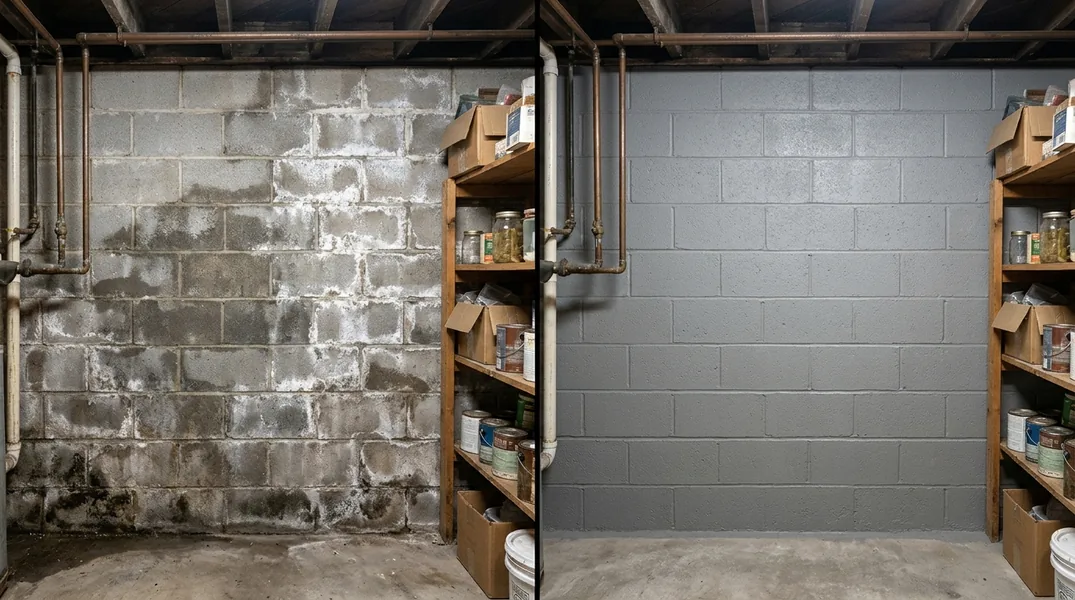
Hydrostatic pressure is the technical term for what happens next. As water builds up in the soil, it pushes against your foundation walls from the outside. Over time, that pressure finds hairline cracks, mortar joints, and the seam where the wall meets the footing. You may see water seeping in during a storm, or you may notice efflorescence, the white powdery residue that appears when water moves through concrete and leaves minerals behind. Limestone seepage can also bring in water that has traveled through underground channels, which is why some basements leak even when the surface ground looks dry.
Common Signs You Have a Reading Basement Leak
Not every leak announces itself with a puddle. Some of the most expensive damage happens quietly. Homeowners in West Reading and Wyomissing often call us after noticing a musty smell, peeling paint on the lower walls, or a white chalky stain near the floor. Those are all signs that moisture is moving through the foundation. If you see any of them, it is worth having the basement inspected before the next heavy rain season.
Other clues include rust on the bottom of a water heater or furnace, warped baseboards, and a floor that feels damp underfoot. In severe cases, you may see water running along the cove joint where the floor meets the wall. That is a strong indicator of hydrostatic pressure and a sign that Basement Waterproofing is needed. The earlier you address it, the less likely you are to deal with mold, structural damage, or ruined belongings.
Basement Waterproofing Near Me: Solutions That Work With Reading's Soil
The right fix depends on how water is getting in and how your home was built. For many Reading homes, an Interior Drain Tile System is the most reliable option. It captures water at the cove joint and directs it to a sump pump before it ever reaches your floor. This approach works well with clay soils because it manages water from the inside, where the pressure is already pushing it. It also keeps the work contained to your basement, which is often more practical than excavating around the entire foundation.
In some cases, Exterior Basement Waterproofing is the better choice. If the foundation walls are showing significant damage or if the original exterior membrane has failed, sealing from the outside can stop water before it reaches the wall. We also recommend Foundation Waterproofing for homes with visible cracks or settling. A proper assessment will tell you which approach fits your situation. If you are unsure where to start, reach out for a free estimate and we will walk you through the options.
Basement Waterproofing Cost in Reading: What to Budget
Homeowners often ask what waterproofing will cost before they commit. The honest answer is that it depends on the size of your basement, the severity of the leak, and the method chosen. A simple interior drain tile system for a smaller basement will cost less than a full exterior excavation. Factors like sump pump installation, crack injection, and the condition of your foundation all affect the final number. We publish clear pricing so you can plan ahead without surprises.
It also helps to think about cost in terms of what you avoid. A finished basement ruined by water, mold remediation, or foundation repairs can cost far more than waterproofing done right the first time. Many homeowners in Mount Penn and across the region find that a proactive solution pays for itself by protecting their home's value and their peace of mind. If you want a specific number for your property, call Reading Waterproofing at (610) 816-6520 and we will schedule a walkthrough.
When to Call a Professional for Your Reading Basement
Some homeowners try to manage basement water with paint-on sealers or a dehumidifier. Those products can help with minor dampness, but they do not address the source. If you are seeing water during storms, noticing cracks that widen over time, or dealing with repeated mold growth, it is time to bring in a professional. The geology under Reading is not going to change, and neither will the water pressure against your walls without a proper drainage solution.
A professional inspection will identify whether you are dealing with shale seepage, limestone channels, or clay-driven hydrostatic pressure. From there, we can recommend a system that fits your home and your budget. Reading Waterproofing serves homeowners throughout the area, and we are happy to answer questions before you commit to anything. Call (610) 816-6520 or visit our website to get started. A dry basement is closer than you think.
Looking for a professional basement waterproofing contractor in Reading? Reading Waterproofing responds fast for all your basement waterproofing needs.
Get a Free QuoteOur services: Basement Waterproofing · Interior Drain Tile System · Exterior Basement Waterproofing