Why Older Reading Rowhouses Are Prone to Foundation Trouble
If you own a rowhouse in Reading, you already know these homes have character. Many were built in the late 1800s and early 1900s, with stone or brick foundations, shallow footings, and shared party walls. That construction style served generations well, but it also means the foundation is more vulnerable to water intrusion and movement than a modern poured-concrete basement. Understanding those weaknesses is the first step in protecting your investment.
The biggest issue is that older foundations were rarely waterproofed the way we do it today. Builders relied on exterior coatings that have long since worn away, and many basements were designed to be damp rather than dry. Add decades of freeze-thaw cycles, gutter overflow, and soil settlement, and you get the classic foundation problems signs that show up in so many historic homes. The good news is that most of these issues can be corrected when you catch them early, which is why a careful below-grade inspection matters so much.
What to Check Below Grade: Basement Wall Cracks and Bowing
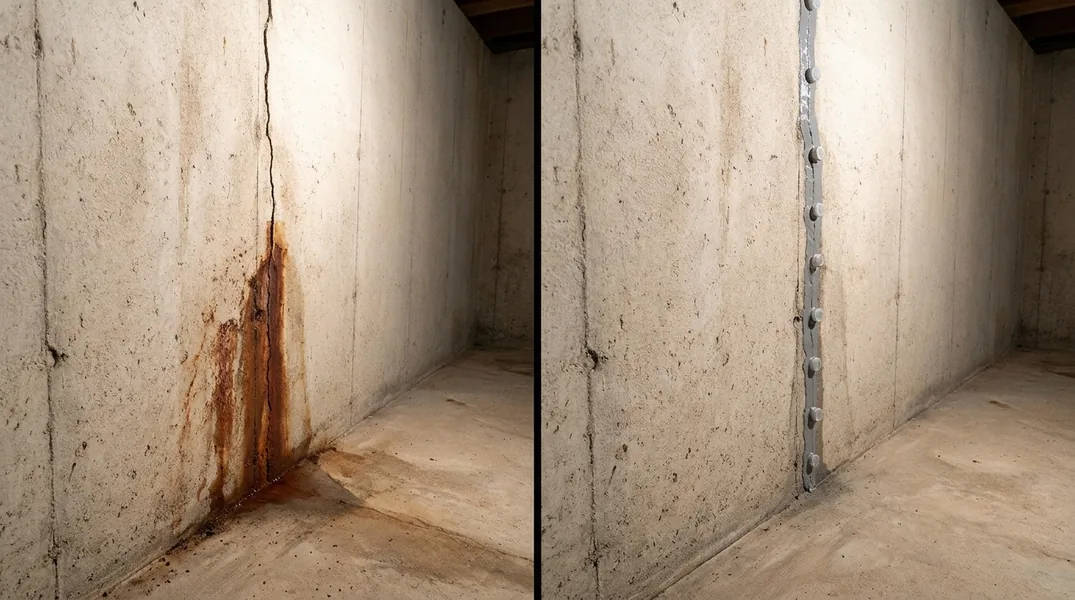
Start your inspection with the basement walls themselves. Hairline cracks in a poured foundation are often cosmetic, but in a stone or brick rowhouse, any crack wider than a hairline deserves attention. Look for basement wall cracks that are horizontal, stair-step, or wider at one end. Horizontal cracks are especially concerning because they can indicate soil pressure pushing against the wall, while stair-step cracks in brick or block often signal settlement. Note the location, width, and whether the crack is wet or has white efflorescence around it.
Bowing basement wall symptoms are another red flag. Stand back and look along the length of each wall. If the middle bulges inward, even slightly, the wall is under load from saturated soil outside. You may also notice doors or windows that stick, or a gap where the wall meets the floor joists above. Bowing rarely fixes itself, and it tends to worsen with each wet season. A professional assessment can tell you whether the wall needs reinforcement or whether Foundation Waterproofing and drainage improvements will relieve the pressure.
Water, Efflorescence, and the Signs of Historic Home Waterproofing Needs
Water is the quiet enemy of every older foundation. Check the base of the walls and the floor for damp patches, rust stains, or a white powdery residue called efflorescence. That powder is salt left behind when water moves through masonry and evaporates, and it is a reliable sign that moisture is traveling through the foundation. Musty odors, peeling paint on the lower walls, and rusted anchor bolts are additional clues. In a historic home, these are the classic triggers for historic home waterproofing work rather than simple cosmetic repair.
Also look at how water behaves outside. Downspouts that discharge too close to the foundation, grading that slopes toward the house, and clogged gutters all send water into the soil around your basement. In a dense rowhouse block, a neighbor's runoff can affect your walls too. If you see recurring dampness after storms, it is worth scheduling a free estimate so a specialist can trace the source and recommend the right fix.
Foundation Problems Signs That Call for Professional Help
Some issues are manageable with DIY maintenance, but others need an expert eye. Call a professional if you notice walls that are visibly bowing, cracks that are actively widening, doors or windows that no longer close properly, or a basement floor that has heaved or settled. These are older home foundation repair signals, and delaying the call usually makes the repair more extensive and more expensive. In a rowhouse, movement in one unit can stress shared walls, so it pays to act quickly.
A qualified contractor will inspect the foundation, check drainage and soil conditions, and explain your options. Depending on what they find, the solution might be an Interior Drain Tile System to manage water at the footing, or Exterior Basement Waterproofing to stop water before it reaches the wall. For many Reading homeowners, a combination of Basement Waterproofing and targeted structural repair is the most reliable long-term answer. You can reach Reading Waterproofing at (610) 816-6520 to discuss what you are seeing.
Basement Waterproofing Near Me: When to Call a Pro in Reading
If you have read this far and recognized one or more of these signs in your own basement, you are probably wondering whether it is time to call. The short answer is yes if the problem is recurring, if water is entering during storms, or if you see any structural movement. Homeowners in West Reading and Wyomissing face the same aging-foundation issues, and the inspection process is the same: identify the source, evaluate the structure, and recommend a repair that fits the home.
Searching for "basement waterproofing near me" is a reasonable first step, but choose a contractor who understands older masonry foundations, not just new construction. Ask about their experience with historic homes, request a written scope of work, and get clear pricing before work begins. A thorough inspection now can save you from a much larger repair later, and it gives you peace of mind that your rowhouse will stay dry through the next Pennsylvania wet season.
Looking for a professional basement waterproofing contractor in Reading? Reading Waterproofing responds fast for all your basement waterproofing needs.
Get a Free QuoteOur services: Basement Waterproofing · Interior Drain Tile System · Exterior Basement Waterproofing